A clearer borrower document follow-up queue
Separate requests, uploads, review decisions, and reminders without expanding the administrative role.
A borrower says the documents were uploaded yesterday. The pipeline still says “waiting.” Before another reminder goes out, someone needs to reconcile the upload, the request, and the reviewer’s decision. That small administrative gap can create duplicate messages and an inaccurate picture of the file.
A useful document queue distinguishes receipt from acceptance. An assistant can maintain the request trail while the loan team decides whether the evidence meets its requirements. The following is an illustrative operating model, not lending advice or a substitute for your lender’s process.
Build the request from an approved checklist
Start with the loan team’s current, file-specific request. Do not ask an assistant to infer necessary documents from a borrower’s occupation, income, or circumstances. Each request should identify the document, the relevant period, the approved upload route, and the person who will review it.
Avoid a catch-all status such as “income documents outstanding.” If the reviewer needs two named items, track them separately. A borrower may complete one request while another needs clarification. A precise queue lets the next reminder acknowledge what has arrived.
| Field | Example of a useful entry |
|---|---|
| Request reference | File identifier plus checklist item |
| Requested item | Wording supplied by the loan team |
| Current stage | Requested, received, under review, or clarification needed |
| Evidence location | Link inside the approved document system |
| Next owner | Named reviewer or follow-up coordinator |
| Next action | Review upload or send approved reminder |
Keep the operational register lean. A link to an approved repository is usually more useful than copying sensitive documents into another spreadsheet.
Separate four different events
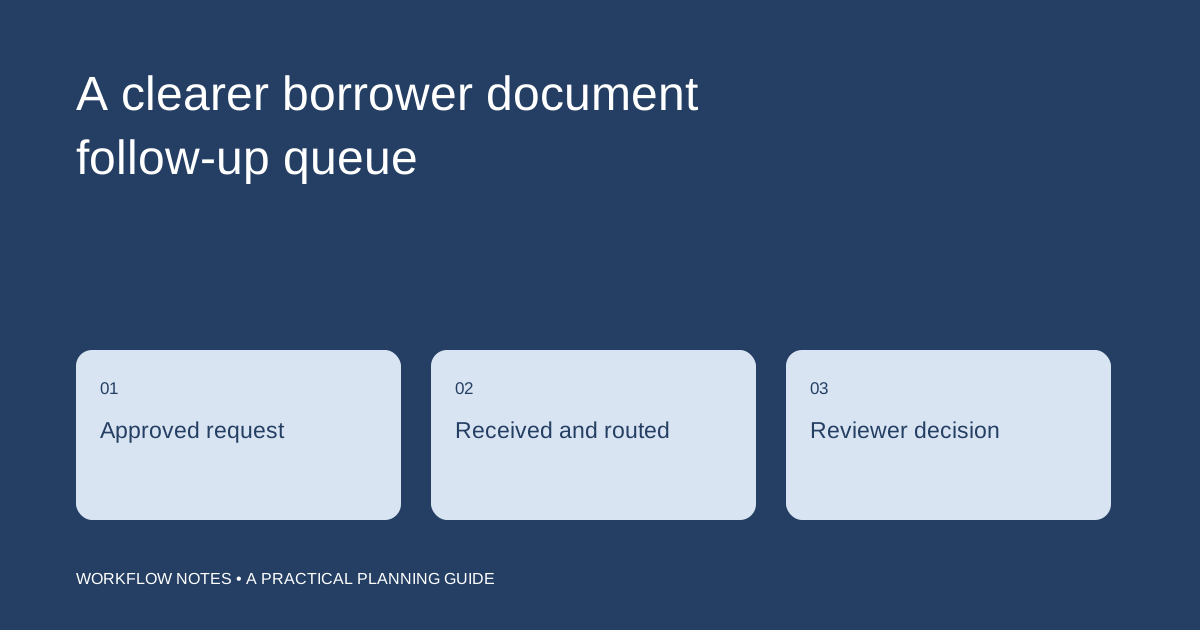
“Requested” means the instruction was issued. “Received” means an upload exists. “Under review” means the designated professional is assessing it. “Accepted” means that professional has recorded a decision. These events should not collapse into a single checkbox.
For example, an assistant may notice that a file does not open. That is a technical issue suitable for an approved re-upload request. Deciding that a document sufficiently verifies income is a different task and belongs to the authorized loan team. Write the difference into the role brief so a busy queue does not quietly expand the assistant’s authority.
Make reminders specific and coordinated
Before sending a reminder, check the latest upload and communication history. Use a template approved by the brokerage, refer to the outstanding item, and direct the borrower to the established secure channel. Do not ask for sensitive attachments in a public contact form or personal messaging account.
Record the date, channel, template, and next follow-up point. When the borrower replies with a question about eligibility or what a document means for the loan, route the question to the licensed professional. The administrative response can acknowledge receipt and explain who will follow up; it should not promise a lending outcome.
Handle changes without losing the original request
A reviewer may replace or clarify an earlier request. Mark the previous item as superseded, connect it to the new instruction, and stop obsolete reminders. Otherwise, two people can follow different versions of the checklist and both believe they are helping.
At the end of a shift, the next coordinator should see three things: newly received items awaiting review, outstanding items with a scheduled follow-up, and exceptions requiring a decision. A narrative inbox summary is less useful if it does not identify the next owner.
Measure the queue rather than promise an outcome
Start with measures the administrative role can influence: requests without owners, uploads waiting to be routed, duplicate reminders, and items past the agreed follow-up time. Review a small sample of records with the loan team to check whether the statuses reflect reality.
These measures describe coordination quality. They do not prove that support caused faster approvals or better loan outcomes. Borrower circumstances, lender review, and other parties can affect timing.
Our borrower document follow-up service focuses on this request trail. Pair it with pipeline administration when the same team also needs a reliable view of milestones and exceptions. A useful first consultation begins with your current checklist, approved communication templates, and the decisions that must stay with your loan professionals.